
 The Greek economy has recovered strongly from the sovereign debt and Covid-19 crises, growing by 8.4% in 2021 and by 5.9% in 2022 with further growth forecast. A part of this recovery is based on a vibrant tourism sector, with estimates of its overall contribution to GDP ranging up to 33%.
|
General data |
|
2022 |
|
Population |
million |
10.4 |
|
GDP |
€ billion |
206.6 |
|
Per capita GDP |
€/person |
19 900 |
At 80.0% in 2021, Greece’s energy import dependency in total energy supply is well above the EU average of 57.1%. Lignite and coal accounted for 7.6% of energy supply in 2022. With a production of 2.4 Mtce in 2022, lignite is Greece’s most important conventional energy resource, although the country also has modest oil and gas reserves. Oil accounted for 51.9% of total primary energy supply in 2022; Greece has a large refining industry which exports oil products. The production from renewable energy sources is growing, notably solar power, to account for 17.7% of supply in 2022.
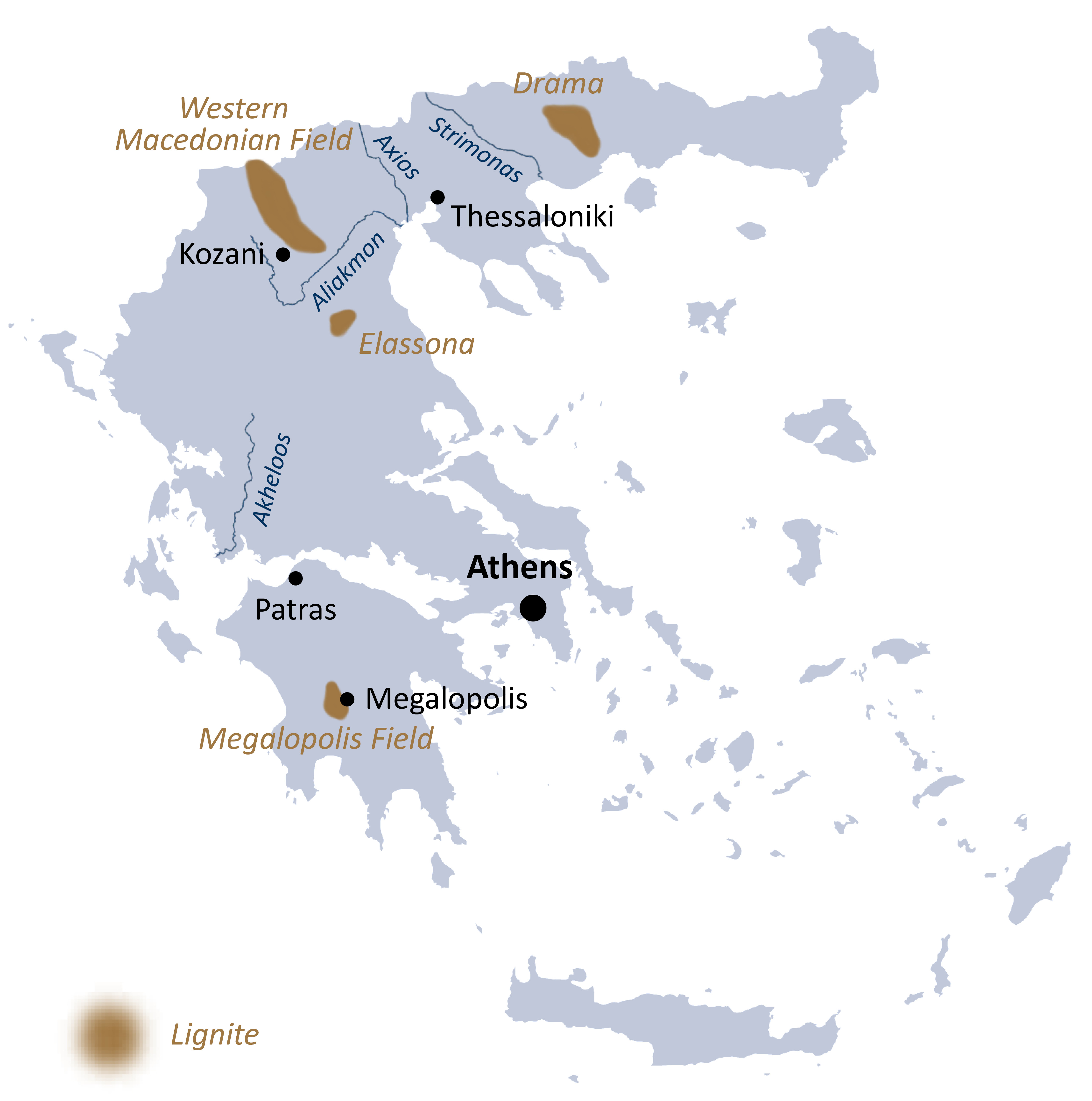
Greek lignite resources are estimated to total 2 200 million tonnes. Lignite deposits are found in specific areas, with the most important deposits in the north of the country at Amynteon-Ptolemais and in the south at Megalopolis. PPC has mining rights covering around 1 000 million tonnes of which 550 million tonnes lie in the active mining areas of Ptolemais and Megalopolis. Other deposits are at Drama (900 million tonnes), Elassona (168 million tonnes) and Florina (112 million tonnes). There is also a large peat deposit of about 4 billion cubic metres at Philippi in the northern part of Greece (Eastern Macedonia). 103 thousand tonnes of hard coal were imported in 2022, mostly for industrial use.
In 2022, Greek electricity production was 52.7 TWh, of which 19.1 TWh were generated at fossil gas-fired power plants, a share of 36.3% in total generation. 18.6 TWh (35.3%) came from new renewable energy sources, and 3.9 TWh (7.3%) from hydro. Lignite-fired power plants supplied 5.8 TWh (10.9%) while 5.1 TWh (9.7%) came from oil-fired plants, often on islands operating isolated systems.
In 2021, Greece reported net electricity imports of 3.7 TWh with the largest share coming from Bulgaria. In 2022, net electricity imports were 3.4 TWh. Since 2015, imports have increased significantly due to the greater penetration of variable renewable energy sources. In some months, electricity imports can reach up to 25% of supply.
Greek energy policy is focused on implementation of the European Green Deal for power generation and further promoting renewable energy sources as the dominant electricity generation technology. Policy towards the lignite sector addresses the decommissioning of lignite-fired power plants and the rehabilitation of lignite mine sites. Greece was the first country to submit territorial just transition plans which were approved with much praise by the European Commission on 16 June 2022.
Lignite
Lignite deposits in Greece lie at an average depth of 150 to 200 metres and typically comprise layers of lignite alternating with mineral layers.
The quality of Greek lignite can be characterised as follows: the lowest calorific values are in the areas of Megalopolis and Drama (3 770 to 5 020 kJ/kg) and Ptolemais-Amynteon (5 230 to 6 280 kJ/kg). In Florina and Elassona the calorific value lies between 7 540 and 9 630 kJ/kg. The ash content ranges from 15.1% (Ptolemais) to 19.0% (Elassona), and the water content from 41.0% (Elassona) to 57.9% (Megalopolis). At less than 1%, the sulphur content is generally low.
Lignite is mainly mined by the PUBLIC POWER CORPORATION (PPC) exclusively in opencast mines. This company is the largest lignite producer in Greece and operates mines in Western Macedonia at Central Field and South Field – the West Macedonia Lignite Center (WMLC). PPC also operates an opencast mine in the Peloponnese region of southern Greece, in the Megalopolis Field – the Megalopolis Lignite Center (MLC).
Bucket-wheel excavators, spreaders, tripper cars and conveyor belts are used to mine and transport lignite at these sites. Hydraulic excavators and heavy trucks are used to remove the hard overburden found at some mines.
In 2022, lignite production in Greece was 14.3 million tonnes, mostly mined by PPC with 10.5 million tonnes extracted by the company at the West Macedonia Lignite Centre and 2.9 million tonnes at the Megalopolis Lignite Centre to give a total of 13.4 million tonnes. A few small, privately owned and operated lignite mines in West Macedonia produced an additional of 0.4 Mt in the same year. Operations at the West Macedonia Lignite Centre removed a total of 39.2 million cubic metres of overburden and interburden, corresponding to an overburden-interburden-to-lignite ratio of 3.7 cubic metres per tonne. At the Megalopolis Lignite Centre, overburden plus interburden removal was 7.7 million cubic metres for an overburden-interburden-to-lignite ratio of 2.6:1. The two mining centres and the head office in Athens employed during 2022 a total permanent workforce of 2 947.
 Four lignite-fired power plants are owned and operated by PPC: the 1 595 MW Agios Dimitrios, the 660 MW Ptolemais Unit V, the 300 MW Megalopolis Unit IV and the 330 MW Meliti Unit. Ptolemais V is one of the most modern lignite-fired power plants in Europe, inaugurated in February 2023 following construction by TERNA SA and HITACHI POWER EUROPE. The long-term future of this plant is yet to be decided, with various plans to either convert it to fire fossil gas or hydrogen, or include it in a capacity mechanism.
In Greece, only small quantities of lignite are used outside of power generation: 14 268 tonnes were supplied to household users in 2022, while 2 503 tonnes were supplied for agricultural use as fertilisers. Over the coming years, the quantity for agricultural use is expected to increase as demand from several fertiliser companies grows.
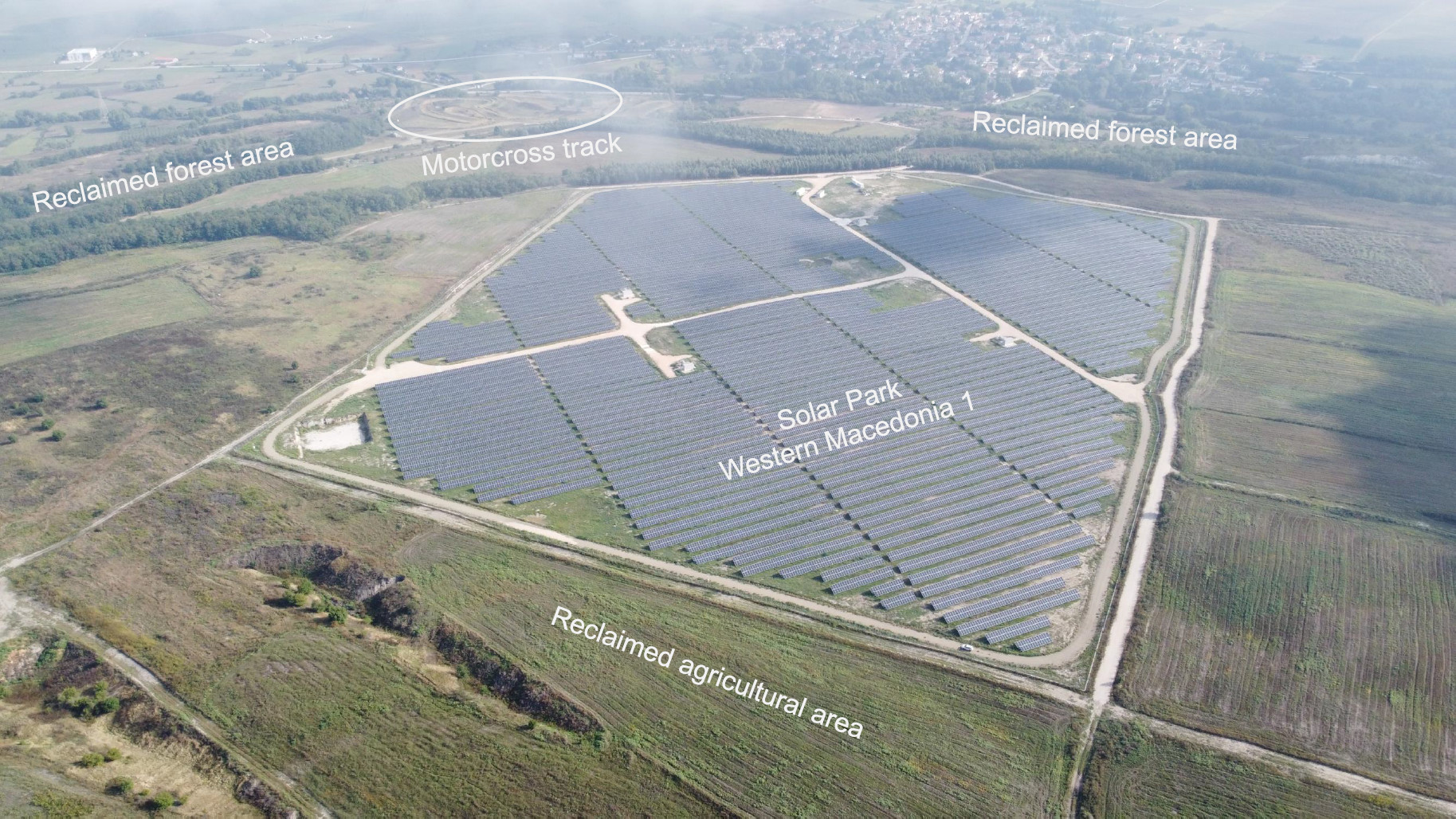
Environmental protection is central to PPC’s corporate strategy and especially its mining activities. In the lignite mining areas around Ptolemais-Amynteon and Megalopolis, PPC has carried out site restoration projects to create farmland, tree plantations, woodland, animal sanctuaries and crop-testing areas. In 2022, an area of around 66 square kilometres has been fully restored.
Greece remains committed to phasing out lignite-based power generation by 2028 and to further increase the use of renewable energy sources. The goal of a complete decarbonisation of the Greek power system is reflected in the forecasts of the National Energy and Climate Plan (NECP – Government Gazette B’ 4893 / 31.12.2019), a plan which also aims to ensure energy security across the whole country and grid stability. At the same time, the plan is aligned with the European Green Deal (COM(2019) 640) which targets net-zero greenhouse gas emissions by 2050.
Just transition
Throughout this decarbonisation effort, a central priority is to ensure a just transition and development of the lignite mining areas of Western Macedonia and Megalopolis. The NECP is based on three pillars: employment protection, compensation for the socio-economic impacts of transition, and energy self-sufficiency for the lignite regions and the country at large.
The related Just Transition Development Plan of 2020 for the lignite areas is itself based on five pillars for development: clean energy, industry and trade, smart agriculture, sustainable tourism, and technology and education. This “master plan” includes enhanced incentives to attract inward investment, as well as specific uses for the tens of thousands of acres of land that will be released as lignite mining comes to an end.

Figure 24 – Lignite production by PPC mines, 1958 to 2022
(Source: PPC)
The state-owned Hellenic Company for Just Development Transition SA (ΕΛΕ.Δ.Α.Μ.) or METAVASI, established by Law 4872/2021 and co-funded by the EU, operates in the public interest and is supervised by the government minister responsible for development and investments. The main scope of the company’s activities is to co‑operate with PPC and the Greek public to diversify economic activities in the affected areas. Activities are all implemented in accordance with the master plan and the Territorial Just Transition Plans accompanying the National Strategic Reference Framework 2021-2027 (Act of the Council of Ministers No. 37 / 37.9.2021). More specifically, activities include:
- the reclamation and exploitation of land included in the Lignite Phase-out Zones whether these belong to the state or are to be acquired by PPC or third parties;
- the redirection/redesign of the business development prospects for these zones;
- attracting, soliciting, supporting, and promoting investments and investment partnerships; and
- providing support to facilitate business development and investment plans, and to promote entrepreneurship in the zones.
Greece
|
Coal production, reserves and resources |
2022 |
|
|
Lignite saleable output |
Mt |
14.3 |
|
Lignite reserves |
Mt |
550 |
|
Lignite total resources |
Mt |
2 200 |
|
Saleable coal quality |
|
|
|
Lignite net calorific value |
kJ/kg |
3 770 ‑ 9 630 |
|
Lignite ash content |
% a.r. |
15.1 ‑ 19.0 |
|
Lignite moisture content |
% a.r. |
41.0 ‑ 57.9 |
|
Lignite sulphur content |
% a.r. |
0.4 ‑ 1.0 |
|
Coal imports / (exports) |
|
2022 |
|
Hard coal |
Mt |
0.1 / (0.0) |
|
Lignite |
Mt |
0.0 / (0.4) |
|
Primary energy production |
|
2022 |
|
Total primary energy production |
Mtce |
7.5 |
|
Lignite production |
Mt / Mtce |
14.3 / 2.4 |
|
Primary energy consumption |
|
2022 |
|
Total primary energy supply |
Mtce |
29.5 |
|
Hard coal consumption |
Mtce |
0.1 / 0.1 |
|
Lignite consumption |
Mtce |
13.1 / 2.2 |
|
Power supply * |
|
2022 |
|
Total gross power generation |
TWh |
52.7 |
|
Net power imports (exports) |
TWh |
3.4 |
|
Total power supply |
TWh |
52.9 |
|
Power generation from lignite |
TWh |
5.8 |
|
Lignite power generation capacity |
MW net |
2 001 |
|
Employment |
|
2022 |
|
Direct in lignite mining |
number |
2 947 |
|
Other lignite-related ** |
number |
776 |
* including small islands with independent diesel generators
** at PPC lignite-fired power plants
 powering transition in Europe