
Albania | Armenia | Austria | Belgium | Croatia | Cyprus | Denmark | Estonia | Finland | France | Georgia | Ireland | Italy | Kaliningrad | Kosovo* | Latvia | Lithuania | Luxembourg | Malta | Moldova | Montenegro | Morocco | The Netherlands | North Macedonia | Norway | Portugal | Spain | Sweden | United Kingdom
Earlier chapters have reported on the key coal-producing countries of the EU and its neighbours. This chapter examines the other EU member states that all use coal to a greater or lesser extent. Also included, because of their alignment towards EU energy policy, are the nine contracting parties and three observers to the Energy Community. Given that the UK and Morocco are well interconnected with EU member states, these two, coal-using countries are included. Finally, Kaliningrad is synchronised with the Russian and Belarusian grid (IPS/UPS) via the Baltic States, at least until 2025, and has its own unique energy security challenges as an isolated enclave.
The 2005 treaty establishing the Energy Community requires contracting parties to implement important parts of the EU acquis on energy markets and environmental protection. It provides for the creation of a single energy market and a mechanism for the operation of interconnected networks. In 2011, the contracting parties agreed to implement the EU’s third internal energy package by January 2015, although parties are not obliged to join the EU emissions trading system. More recently, the Energy Community has provided dedicated support to Ukraine and runs its own Just Transition Initiative for contracting parties.
The Energy Community offers opportunities to owners of coal-fired power plants in Southeast Europe who have access to what is the world’s largest electricity market. At the same time, plant owners are required to make very substantial investments in pollution control equipment to meet stringent EU emissions legislation.
 Armenia
Since 2018, the South Caucasus country of Armenia has co‑operated with the European Union via the EU-Armenia Comprehensive and Enhanced Partnership Agreement (CEPA) which came into force in 2021. In 2022, the EU was Armenia’s second most important trading partner, after Russia which supplies oil, gas, coal and nuclear fuel.
The country generates electricity at gas-fired power plants, accounting for 44.1% of the 7.7 TWh total generation in 2021, at the Sevan-Hrazdan, Vorotan and other hydro plants (28.7%) and at the 440 MW Metsamor nuclear power plant (26.0%) located 30 kilometres from the capital Yerevan. Solar PV accounted for the balance.
Armenia has six major coal deposits with estimated total resources of 317 million tonnes. Only the Jajur deposit has officially approved reserves of 355 thousand tonnes. However, no deposits have been exploited in recent years. In 2022, Armenia imported a few thousand tonnes of coal from Russia for use in industrial applications.
 Austria
Austria’s developed economy includes a large industrial sector – around one quarter of GDP. Germany is its largest trading partner but since the fall of the Iron Curtain, Austria has increased trade with other countries under the former Habsburg monarchy.
Thanks to its geography, Austria has good hydro resources and generated 50.1% of its electricity at hydropower plants in 2022, mostly at run-of-river plants. The second-largest source of electricity was fossil gas (15.1%) while the rest was covered by renewables, mainly wind (10.5%) and biofuels (6.8%), but also solar PV (5.5%). Electricity is traded with all neighbouring countries and in 2022 Austria was a net importer of 8.7 TWh, meeting 12.6% of demand.
The Baumgarten gas distribution hub is one of Europe’s most important trading points, distributing Soviet, then Russian gas to Western European customers. This role has continued during Russia’s war on Ukraine and the ensuing EU sanctions against other Russian energy commodities.
Although no longer exploited, Austrian lignite resources total 333 million tonnes, lying mainly in western Styria near Graz. During the monarchy, energy demand was met with coal from Moravia and Silesia. After each world war, hard coal and lignite mining was expanded to replace production lost elsewhere; lignite output peaked at over 6 million tonnes in 1963 when 100 thousand tonnes of hard coal were also mined. With increasing trade and more oil and gas use, Austria’s underground coal mines became uncompetitive and closed during the 1960s. After more than two centuries, coal mining ended in 2006 with the re‑cultivation of Oberdorf opencast lignite mine.
Austria imports hard coal for industrial uses – 2.5 million tonnes in 2022. The integrated steel works operated by VOESTALPINE at Linz is the biggest consumer. Production of coke for steelmaking – 1.3 million tonnes in 2022 – satisfies about two-thirds of demand. Before the EU ban on Russian coal imports from August 2022, Austria imported from there but now relies only on suppliers in Poland, Australia and the United States.
VERBUND’s 225 MWe Mellach CHP plant supplying Graz with district heating used coal until March 2020. Plans to reopen it during the energy crisis were abandoned in January 2023.
Baltic States
The neighbouring Baltic States of Estonia, Latvia and Lithuania are all in the eurozone and Schengen area. To their south, the Russian enclave of Kaliningrad Oblast borders Lithuania and Poland. The Baltic States are among Europe’s fastest-growing economies, but face unique market-access challenges due to their location. The three countries are electrically linked to the BRELL network which includes Belarus and Russia. By 2025 or earlier, they will synchronise with the continental European electricity grid – a move approved by the European Network of Transmission System Operators (ENSTO‑E) in May 2019. Four DC interconnectors connect the Baltic States to Poland, Sweden and Finland: 500 MW LitPol, 700 MW NordBalt, 350 MW Estlink 1 and 650 MW Estlink 2. As of 2021, the European Commission considered all three states to be “coal-free”, although all use small quantities of coal for industrial purposes. Estonia also mines oil shale, a solid fossil fuel used in a similar way to coal.
Russia exports coal from Ust-Luga, 120 km west of St. Petersburg and the largest port for coal in the region, although ice can hinder operations there as well as at St. Petersburg and Vyborg (Vysotsk) ports. A project to expand Primorsk port to handle 25 million tonnes of coal per year is underway. Until 2022, alternative routes for Russian coal exports included the Baltic Coal Terminal at Ventspils in Latvia with an annual capacity of 6.0 million tonnes and the ports at Tallinn (Muuga) in Estonia, Riga and Liepāja in Latvia, Klaipėda in Lithuania and Kaliningrad. Klaipėda port is strategically important as the northernmost ice-free port on the eastern coast of the Baltic Sea.
 Estonia is unique in using indigenous oil shale for its energy supply. It enjoyed an energy import dependency of just 1.5% in 2021, by far the lowest in the European Union. Large quantities of oil shale are used to generate competitively priced electricity at thermal power plants where it is combusted in much the same way as coal – either as a pulverised fuel in older boilers or in modern circulating fluidised-bed boilers (CFBs). In 2022, oil shale contributed 57.0% to Estonia’s gross electricity generation, followed by biomass (17.0%), wind (7.5%) and solar PV (6.7%).
Oil shale is a sedimentary rock containing up to 50% organic matter – Estonian oil shale extracted from the Baltic kukersite deposit has a heating value of 8 000-11 000 kJ/kg and 1.5% to 1.8% sulphur content. Once extracted from the ground, the rock can be either used directly as a fuel in power plants or processed into petroleum products.
Estonia’s accessible oil shale reserves total approximately 1.5 billion tonnes. In 2022, 10.6 million tonnes of oil shale were mined by EESTI ENERGIA and VIRU KEEMIA GRUPP at underground mines and by EESTI ENERGIA, KIVIÕLI KEEMIATÖÖSTUS and KUNDA NORDIC TSEMENT at surface mines. In underground mines, traditional room-and-pillar mining methods are used. To improve recovery rates and reduce production losses, EESTI ENERGIA plans to test a 700‑metre long-wall mining face at one underground mine.
At the beginning of the century, oil shale production was trending upwards to meet growing demand for oil products produced from oil shale. In response, the Estonian government set in 2018 an annual limit for oil shale mining of 20 million tonnes. Estonia plans to further increase the share of renewable energy sources and evaluates the possibility of building a nuclear power plant. The country aims to cease electricity production from oil shale by 2035, to phase out oil shale in energy production by 2040 and to reach climate neutrality by 2050.
Around 55% of oil shale production is used for electricity and heat generation, notably at the EESTI ENERGIA Narva energy complex, comprising the 1 015 MW Eesti power plant, the 215 MW Balti power plant which also supplies heat to the town of Narva and the adjacent 272 MW Auvere CFB power plant which runs on oil shale, biomass, peat and oil shale gas.
The environmental issues associated with oil shale exploitation are complex. With 45% incombustibles, the quantities of ash to store or recycle are large. All operational pulverised-fuel boilers have been upgraded to comply with the EU Industrial Emissions Directive. Balti 11 and Eesti 8 were repowered with CFB boilers and further units have been fitted with a novel integrated desulphurisation system, supplemented with lime injection and deNOx systems. Although Estonia has decided to stop producing electricity from oil shale within the next decade, in 2022 the demand for electricity from oil shale increased due to the energy crisis. Compared with 2021, one third more oil shale was mined and 42% more electricity produced from oil shale.
5 659 people are employed in the Estonian oil shale industry, of which around 2 475 are employed at mines.
 Latvia used to be an important transit country for shipping Russian coal to other EU member states. Since the EU ban of August 2022 on Russian coal imports, only Kazakh and Kyrgyz coal has been transhipped. Latvia generates most of its electricity at hydropower plants, 55.0% in 2022, followed by fossil gas at 24.2% and 20.7% renewables. Latvia imported 45 thousand tonnes of hard coal in 2022.
 Lithuania, with the highest population and energy demand of the Baltic States, depends on imports to meet three quarters of its energy needs. Its energy mix is dominated by imported oil and fossil gas, with only 295 thousand tonnes of imported coal in 2022.
The closure of the Ignalina nuclear power plant at the end of 2009 left a power generation gap in the Baltic region. This could have been filled by the proposed Visaginas nuclear power plant, but Lithuanians voted against this project in a 2012 referendum. Ever since, Lithuania has relied upon electricity imports: 8.6 TWh net in 2022 to meet 70% of demand. The remaining 30% was met mainly by renewables and hydropower.
Since 2014, the Klaipėda LNG terminal has been a hub for LNG trade in the Baltic region and ended the region’s dependence on Russian pipeline gas. This floating storage and regasification unit (FSRU) with an annual capacity of 4 billion cubic metres might be expanded in the future.
 The Kaliningrad enclave is dependent on imported energy from the rest of Russia, although power is generated locally: at the 900 MW Kaliningradskaya 2 gas-fired power plant completed in 2010, the 160 MW Mayakovskaya and 160 MW Talakhovskaya gas plants completed in 2018, the 455 MW Pregolsky gas plant completed in 2019 and the backup 195 MW Primorskaya coal-fired power plant completed in 2020. Fossil gas is supplied via a single pipeline from Russia or via the Marshal Vasilevskiy LNG floating storage and regasification unit (FSRU) commissioned in 2022. The 174 million cubic metre (mcm) underground gas storage facility created in salt caverns provides security and will be expanded to hold 800 mcm by 2025.
In 2025, when the Baltic States synchronise with the Continental Europe Synchronous Area, Kaliningrad will operate as an isolated system. In May 2019, Kaliningrad’s power grid was temporarily run in isolation to demonstrate its readiness.

Although construction stopped in June 2013 of the new 2 400 MW Baltiyskaya nuclear power plant at Neman close to the Lithuanian border, it would remain a viable project if customers for its electricity could be found in Germany, Poland and the Baltic States. With three years of civil works completed, major pieces of power plant equipment delivered to the site are being kept in storage, although in 2017 the pressure vessel for unit 1 was sent to replace a damaged vessel at the 2 400 MW Ostrovets 2 nuclear power plant in Belarus. Lying 50 kilometres from Vilnius, the Ostrovets plant is fully commissioned and operational after the second unit was connected to the grid in May 2023.
While the EU has imposed extensive sanctions on Russia, transit of goods between Russia and Kaliningrad, including coal, are exempt if they do not exceed the previous three-year average.
 Belgium
Belgium’s gross electricity generation in 2022 was 95.9 TWh of which 45.7% was nuclear (12.8% lower than 2021 when nuclear power generation reached an all-time-record high of 50.3 TWh), 25.2% renewables, 22.9% fossil gas and 2.4% coal. Belgium is a net exporter of electricity and carries power flows from Germany and the Netherlands to France and the United Kingdom. In 2003, the government decided to end nuclear power generation by 2025. In 2022 and 2023, the 1 GW Doel 3 and 1 GW Tihange 2 units were duly closed. However, the energy crisis reopened this decision and in 2023 the government agreed with ENGIE to continue operation of the newest units (1 GW Doel 4 and 1 GW Tihange 3) until 2035.
In the 19th century, the Walloon coal mines of southern Belgium fuelled the country’s industrial expansion. By 1917, coal mining had started in the north-east, around Limburg. National coal production peaked at 30 million tonnes in 1952 and was maintained at this level until the late 1950s. Output gradually declined as the Walloon and Limburg mines closed: Eisden mine in 1987 and Belgium’s last colliery at Heusden-Zolder in 1992. Remaining coal resources are an estimated 4 100 million tonnes.
Coal imports totalled 3.2 million tonnes in 2022, mostly from South Africa and the United States (more coal was imported into Antwerp port for onward delivery to customers in other countries). Coal provided 5.4% of Belgium’s primary energy supply in 2022, used mainly by the steel industry, notably by ARCELORMITTAL at Ghent. With the decommissioning of Ruien coal-fired power plant in 2013 and the conversion of other coal plants to fire biomass, coal consumption for power generation is no longer significant.
 Cyprus
Cyprus imports small quantities of hard coal – 80 thousand tonnes in 2022 – for use mainly by VASSILIKO CEMENT WORKS. Given the rising cost of EU ETS allowances, the company is actively looking at alternative fuels. For its electricity needs, Cyprus is reliant on imported fuel oil for power generation (83.2% in 2022), with the remainder being met by solar PV, wind and some biogas. A national target for renewable energy would see this share double to 30% by 2030 with a network of state-owned energy storage systems. Cyprus exerts no control over the northern territories administered by the Turkish Republic of Northern Cyprus which relies mainly on fuel oil and diesel for electricity generation. Electrically isolated, Cyprus promotes the 2 GW EuroAsia Interconnector to link Greece, Cyprus and Israel via a 525 kV HVDC (high voltage, direct current) submarine cable. A contract for the Cyprus-Greece section was awarded in July 2023. Also, the proposed 1 900‑kilometre EastMed gas pipeline between Cyprus, Israel and Greece would connect Eastern Mediterranean gas fields to strengthen EU energy security. A shorter, 300‑kilometre pipeline to Cyprus could be built more quickly, with
the promise of future hydrogen transport to help secure public funding.
 Denmark
With rising oil and gas production from the North Sea, Denmark became energy self-sufficient in 1999 and, in 2004, a net exporter of primary energy. Since then, production has steadily declined by 80% to 90% such that Denmark can no longer be considered a major oil or gas producer. Denmark returned to being a net energy importer in 2013 and, at around 50%, its energy import dependency is now near the EU average.
Danish energy supply changed significantly with efforts to promote renewable energy, combined heat and power (CHP) and energy efficiency. The remarkable growth of wind energy – 19.0 TWh or 54.2% of total generation in 2022 – means renewables are expected to supply more than 100% of the country’s power needs by 2030. At least 90% of district heating is to come from non-fossil energy sources by 2030 as part of the government’s long-term goal for climate-neutrality by 2050.
In 2022, 81.1% of gross electricity generation came from renewable sources, mostly wind and biomass. The relatively high use of onshore (4.6 GW) and offshore (2.3 GW) wind turbines enhances electricity supply security but poses balancing challenges. The Danish power system has connections to Norway, Sweden, Germany and the Netherlands, with the 325-kilometre, 700 MW COBRAcable operating since 2019, and the new 760-kilometre 1.4 GW Viking Link to the UK to open at the end of 2023. Denmark’s electricity imports in 2022 were 18.8 TWh or 1.4 TWh net of exports to account for 4.0% of supply. As part of the integrated Nordic electricity market, Denmark’s thermal power plants play an important role in balancing not only wind power, but also hydro power from Norway and Sweden which depends on annual precipitation.
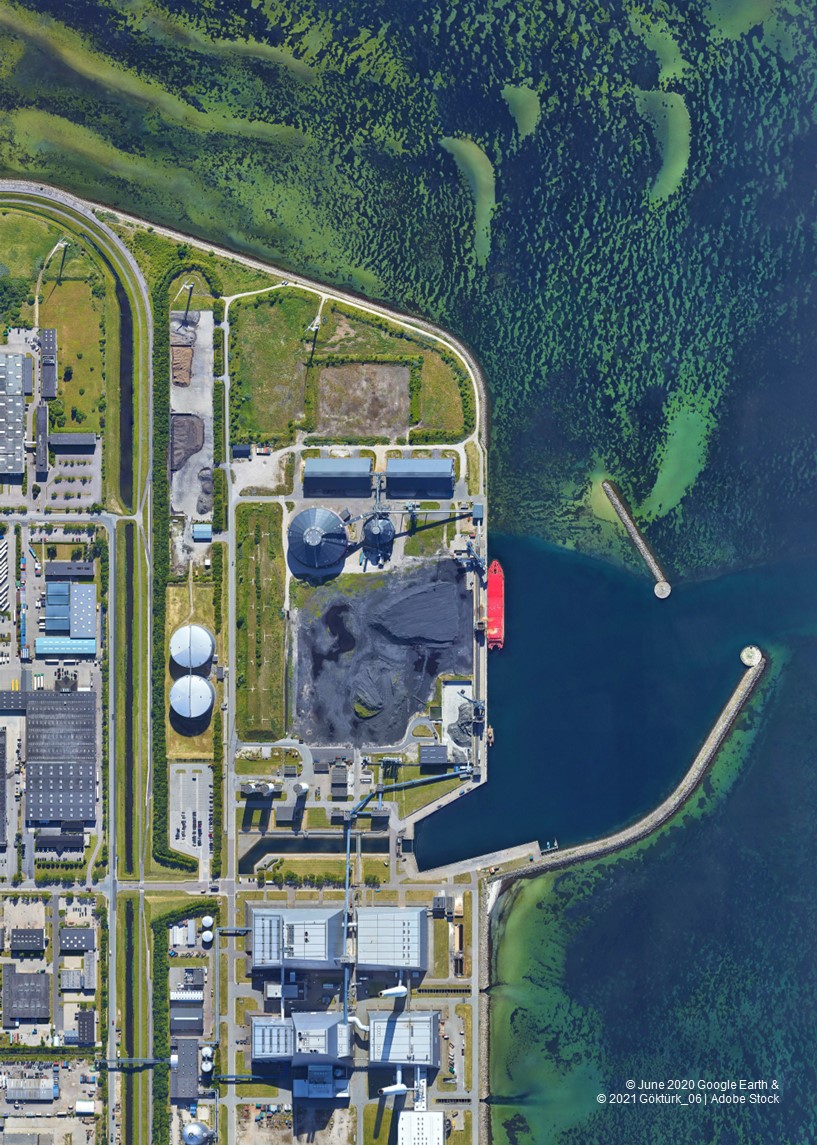
Coal-fired power plants in Denmark have a total generation capacity of 3.2 GW; most are fuelled with biomass. The majority state-owned ØRSTED runs Asnæs (26 MW), Avedøre (806 MW), Esbjerg (373 MW) and Studstrup (362 MW) power plants. Most units at these plants can burn biomass – wood pellets or straw – the result of ØRSTED’s bio-conversion programme for all its coal- and gas-fired CHP units. Following an order from the Danish authorities, ØRSTED has delayed its target to end coal use by one year to 2024.
Amager power plant is owned by a subsidiary of Copenhagen’s municipal heat and power company, HOFOR ENERGIPRODUKTION. In 2010, the 68 MW coal-fired unit 1 dating from 1971 was converted to biomass. Then, in 2020, HOFOR commissioned the stylish 150 MW BIO4 unit. The whole power plant now runs on wood pellets. At Odense, the 409 MW Fyn power plant includes a straw-fired boiler and a coal-fired unit, with the latter set to close by 2025. Finally, since 2015, the 410 MW Nordjylland plant has been owned by the local municipality’s utility company, AALBORG FORSYNING.
Avedøreværket and Nordjyllandsværket 3 remain among the world’s most efficient coal-/biomass-fired power plants. Their high-temperature, high-pressure, supercritical boilers and steam turbines result in an electrical generation efficiency of 47% and, with heat supply, their overall efficiency can exceed 95%.
Denmark has no indigenous coal resources. In 2022, the country imported 1.9 million tonnes of coal, mostly from South Africa, Colombia and Australia. Almost 90% of this coal was used for electricity and heat generation with cement production and food processing being the other main uses. Having peaked in 1984 at 96%, the share of coal in power generation fell to 12.6% in 2022 (4.4 TWh) and will be gradually phased out before 2030 in line with government policy.
 Finland
Even though it has no oil, gas or coal resources, Finland had an energy import dependency of just 38.3% in 2021 – well below the 57.1% EU average. Finnish energy policy maximises energy-supply diversity. Over one third of electricity production was from nuclear in 2022 and Finland’s fifth nuclear reactor, the 1 600 MW EPR operated by TVO at Olkiluoto, began full commercial operation on 16 April 2023. However, in June 2015, TVO shareholders resolved not to proceed with plans for a second new unit at Olkiluoto.
Locally produced peat is used as a fuel, mostly at dedicated district heating plants and at combined heat and power (CHP) plants. Peat accounted for 3.0% of gross electricity generation in 2022. In its territorial just transition plan approved by the European Commission in December 2022, Finland will halve the energy use of peat by 2030 (c.f. 2018-2020). Consumption in 2022 was 3.7 million tonnes with stock drawdown adding significantly to production.
Finland is one of the world leaders in bioenergy. Renewable energy sources provided two-thirds of total primary energy production and accounted for 53.6% of power supply in 2022. Nevertheless, coal and fossil gas remain important fuels for CHP and district heating plants, although coal’s share in conventional generation is falling. In 2022, gross electricity generation from coal was 6.2 TWh (8.6% of total), with an important contribution from the 565 MW Meri-Pori coal power plant at Tahkoluoto in Pori. In total, coal-fired generation capacity was 1.7 GW in 2022. The efficiency of heat and power production in Finland is very high; approximately one third of electricity is produced at CHP plants which operate with overall efficiencies of 80% to 90%. These plants are used widely by industry and for both district heating and cooling.
Annual coal imports to Finland were 4.0 million tonnes in 2022: 2.6 million tonnes of steam coal for energy production and 1.3 million tonnes of coking coal for the steel industry. Small quantities of coal are also used by the paper and cement industries. All coal is imported, steam coal entirely from Russia in the past and now from Australia, Colombia and the United States. Coking coal arrives from North America and Australia.
Finland’s National Climate and Energy Strategy accounts for the country’s special features, including its cold climate, long transport distances, extensive energy-intensive industry and domestic raw material resources, especially forest biomass. To implement the strategy, the government has taken many measures, in particular on energy efficiency, energy saving and electrification. Finland aims to increase the share of renewable energy in final consumption to 50% by 2030 and become carbon neutral by 2035. As the share of renewable energy increases, the government wants to diminish the shares of peat and fossil fuels, in particular coal which is heavily taxed for heating use (220 €/tonne). In May 2019, the Finnish parliament approved a ban on coal-fired power generation from 1 May 2029, except when used as an emergency backup fuel, and a €90 million subsidy for companies that phase out coal by 2025.
 France
Hard coal mining in France ended in April 2004 with the closure of the last operational mine, La Houve in the Lorraine region. The state-owned coal company Charbonnages de France ceased activity at the end of 2007. Remaining coal resources in France are estimated to be 160 million tonnes of hard coal and 114 million tonnes of lignite.
In 2022, coal imports amounted to 7.8 million tonnes, including 3.5 million tonnes of coking coal from Australia and the United States. Coal can be delivered through the ports of Dunkerque, Le Havre, Rouen, Montoir and Fos-sur-Mer, as well as via the ARA ports. Coal consumption was 8.1 million tonnes in 2022, of which an estimated 1.6 million tonnes were consumed for power generation.
Gross power generation in France was 474.8 TWh in 2022, with 62.1% of this total generated at nuclear power plants. Conventional thermal power generation contributed 12.2%, hydro 9.6%, wind 8.0% and solar PV 4.1%. Coal-fired power generation accounted for 1.3% of the total while the overall share of renewables was 23.9%.
In its Programmation pluriannuelle de l’énergie published in November 2018, the French government announced an end to coal-fired power generation by the end of 2021. Today, the only large coal power plants in France are located adjacent to the port at Cordemais (2 × 600 MW) and at Saint-Avold in Lorraine where the 600 MW Émile-Huchet unit 6 must remain operationally available until the end of 2024, according to a government decree of August 2023. By 2025, EDF plans to convert its Cordemais plant to fire biomass while EPH plans a 20 MW biomass plant at Émile-Huchet. RTE, the French power transmission system operator, considers the Cordemais plant to be essential for electricity supply security in western France and EDF has been allowed its limited operation on coal until 2026. EDF’s 600 MW Le Havre coal plant was closed in April 2021 and is being demolished. EPH-owned GAZEL ENERGIE operated the now closed 600 MW Gardanne unit 5 in Provence until late 2020. At Gardanne-Meyreuil, GAZEL ENERGIE operates a 150 MW circulating fluidised bed unit converted in 2017 from coal to biomass and known as “Provence 4 Biomasse”. The company hopes to expand its activities at Gardanne to include the production of green hydrogen and e‑fuels, as well as district heating and a sawmill. These plans are a response to a March 2023 decision of the Conseil d’État to annul the plant’s operating licence, citing an inadequate impact assessment that did not consider indirect impacts on regional forestry.
There are three 100 MW coal-fired power plants in French overseas territories: one in Guadeloupe (Le Moule) and two in Réunion (Le Gol and Bois-Rouge). During sugar campaigns, these plants also use renewable bagasse and each is being equipped to run on imported biomass in place of coal.
The French steel industry consumes important volumes of coal – around 5.6 million tonnes at integrated steel works in 2021. ARCELORMITTAL plants at Dunkerque and Fos-sur-Mer are the biggest coal consumers in this sector.
 Georgia
Lying in the Caucasus region between Europe and Asia, Georgia has a pro-European foreign policy and applied for EU membership in March 2022. Georgia’s economy is open and liberalised, ranking seventh in the World Bank “doing business index”. Russian forces occupy about one-fifth of its territory – Abkhazia and parts of South Ossetia – over which the Georgian government has no control.
Georgia relies mainly on hydropower for electricity generation: 80.5% of the 12.6 TWh total in 2021, followed by imported fossil gas at 18.8% and little else. Georgia is a net importer of electricity with exports to Türkiye lower than imports from Russia.
In the Tkibuli-Shaori and Tkvarcheli deposits, Georgia has coal reserves of 201 million tonnes plus resources of 700 million tonnes. The Akhaltsikhe lignite deposit near Vale has reserves of 76 million tonnes, currently not exploited. Coal production in Georgia peaked at 3 million tonnes in 1958, but by 2000 production had collapsed to almost zero. Following the “Rose Revolution” of 2003 and conflict with Russia in 2008, the small coal industry was revitalised.
In 2022, 148 thousand tonnes of brown coal were produced from two underground mines at Tkibuli in west-central Georgia and 104 thousand tonnes of hard coal imported mainly for industrial use. Coal provided 4.2% of Georgia’s total primary energy supply of 7.6 million tonnes of coal equivalent in 2021. Fossil gas was the main primary energy source (45.6%), followed by oil products (26.0%) and renewables (21.5%). Wood is used extensively, mainly for space heating, water heating and cooking.
SAKNAKHSHIRI (Georgian Coal), a subsidiary of STEEL INTERNATIONAL TRADE COMPANY, owns and operates the Dzidziguri and Mindeli mines at Tkibuli with licensed resources of 331 million tonnes. These supply cement works at Kaspi and Rustavi, a small 13 MW coal power plant at Tkibuli, as well as the ferroalloy industry. In 2019, DMT presented a report with recommendations to improve safety at the mines which then employed 1 400 workers.
Instead of the previously proposed 150 MW Tkibuli and 300 MW Gardabani coal power plants, a 460 MW combined cycle gas turbine plant was built at Gardabani in the southeastern Kvemo Kartli province by ÇALIK ENERJI (unit 1 in 2015) and CHINA TIANCHEN ENGINEERING CORPORATION (unit 2 in 2020). Plans will see its capacity doubled and tenders were invited for unit 3 in June 2023. The Georgian government will also focus on securing private investment to construct new hydro plants, increase thermal power generation efficiency and diversify fossil fuel supply sources and routes.
In occupied Abkhazia, the Turkish operator TAMSAŞ produced good quality coal at an opencast mine in the Tkvarcheli coalfield, once the largest coal mine in the Caucasus region. Exploitation stopped in 2018 as the deeper parts of the 20 million tonne reserve became uneconomic. The Jukmuri coal terminal at Ochamchire has been greatly expanded to handle transhipments. The occupied region of South Ossetia does not generate electricity but relies on transmission from Russia.
 Ireland
The Irish economy has grown remarkably since the 2008 global financial crisis, partly thanks to Ireland’s attractiveness as the European base for some major multinational companies. Among EU member states, Ireland’s per-capita GDP is second only to Luxembourg. Energy use has grown to support an increasingly services-based economy, but is still below the pre-crisis level of 2007. Energy production has also grown with strong growth of wind power over the last two decades and fossil gas since the Corrib gas field began production in December 2015. Although Ireland’s import dependency fell to 77.9% in 2021, its coal and oil needs must all be imported.
Coal imports totalled 1.5 million tonnes in 2022, all steam coal and mostly from Colombia. As well as power generation, coal is used in Ireland for household heating and cement production. In 2022, Ireland also used 1.0 million tonnes of harvested peat, this being two-thirds less than in 2018 and much of it from stocks. Peat now accounts for a minor 2.5% of primary energy supply.
BORD NA MÓNA, once Ireland’s leading peat producer and distributor of peat briquettes for residential heating, stopped peat harvesting in 2020. Some small producers and informal “turf cutters” remain, but there is political pressure to end peat sales.
Since 2001, peat-fired power plants were supported by a public service obligation as their use of indigenous fuel contributed to electricity supply security. However, this support expired in 2015 in the case of the Edenderry power plant and in 2019 in the cases of the West Offaly and Lough Ree plants. In addition, the government set a 30% biomass dilution target for peat used as a fuel. For example, the 120 MW Edenderry power plant was designed and built to fire peat, but is now co‑fired with a mixture of peat and biomass from forests and energy crops. In 2022, 0.7% of Irish electricity was generated from peat and 1.5% from biomass. Once peat stocks are exhausted, only biomass will be fired at power plants.
Ireland has one coal-fired power plant, at Moneypoint in County Clare operated by the ELECTRICITY SUPPLY BOARD (ESB). At 915 MW, it is Ireland’s largest power station, having been fully commissioned in 1987 as part of a fuel diversification strategy. Significant refurbishments have been carried out by ESB to meet environmental standards, including a €368 million investment in pollution control equipment to meet EU regulations on NOx and SO2. Moneypoint is expected to operate until 2025. Indeed, the Irish government’s policy is to cease using coal for electricity generation by 2025. However, Moneypoint is Ireland’s largest energy store, with a capacity to stock sufficient coal for three months’ operation (c.f. five days at Ireland’s fossil gas plants). The power plant remains important for national energy security and fuel diversity.
Fossil gas was the dominant fuel for power generation in 2022 with a 48.8% share of generation, followed by wind (33.1%) and coal (7.7%). Although a single electricity market covers the Republic of Ireland and Northern Ireland, and the 500 MW East-West and 500 MW Moyle interconnectors link this to the UK mainland, the island market is quite isolated. With wind power generation growing strongly, the island grid increasingly relies on conventional power plants during periods of low wind and high demand. A third HVDC interconnector is under construction – the 500 MW Greenlink scheduled to complete in 2024 – while the 575-kilometre, 700 MW HVDC Celtic Interconnector to France is scheduled to complete in 2026 as Ireland’s first, direct connection to the synchronous grid of Continental Europe.
 Italy
ItalyItaly has the third highest GDP in the European Union: €1.9 trillion in 2022. The country has a strong manufacturing base and enjoys a significant trade surplus. Public debt reflects a high level of government spending and means the economy suffers from structural problems which successive governments have aimed to resolve.
Coal accounts for a small part of Italy’s primary energy supply at 5.1% of the 206.5 million tonnes of coal equivalent total in 2022. As in all other EU member states, oil and gas are important, and especially so in Italy where they account for three quarters of energy supply. The country has no nuclear power. In a decisive June 2011 referendum, Italian voters rejected government proposals to restart a nuclear programme that was abandoned following an earlier referendum held after the 1986 Chernobyl disaster. Renewables and waste make up the remaining share of energy supply. Overall, this energy mix means Italy has a high import dependency – 74.7% in 2022.
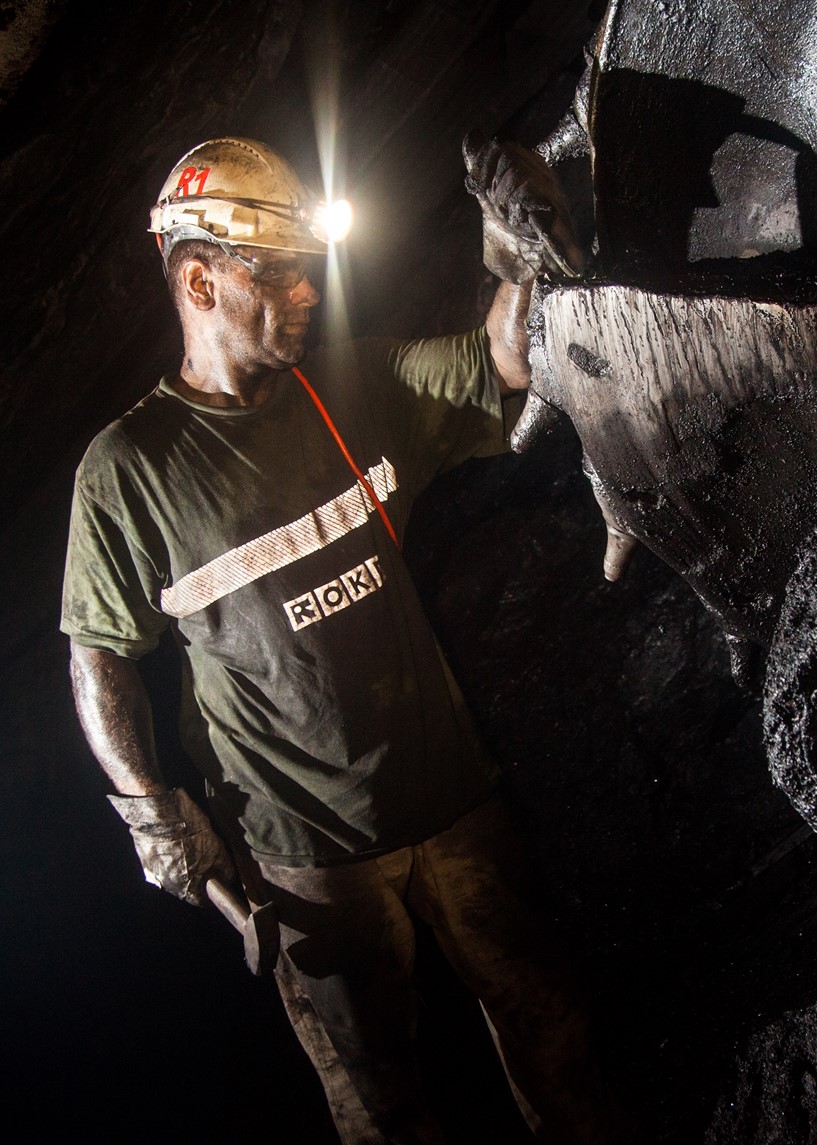
The only coal reserves and resources in Italy lie in the Sulcis-Iglesiente basin, in south-west Sardinia, totalling an estimated 10 million tonnes. Mining activities were stopped there in 1972, but restarted in 1997 with many environmental improvements. In accordance with EU state-aid rules, CARBOSULCIS, owned by the Regional Government of Sardinia, closed Monte Sinni, the last mine at Nuraxi Figus, in December 2018. The agreed closure plan foresees site restoration and redevelopment by 2027.
For electricity generation, Italy is very dependent on fossil gas: 49.8% of the 284.0 TWh total gross generation in 2022. New renewables accounted for 25.4%, with solar PV, wind and biofuels all important. Hydro’s share was 10.0%. The next largest source of electricity generation in 2022 was coal at 8.5%, with oil and waste accounting for the remainder.
After growing strongly under five Conto Energia schemes which ended in 2013 and other green subsidies, the share of new renewables (solar PV, wind and biofuels) stagnated over the eight-year period to 2022 at around 20%. Net electricity imports of 43.0 TWh in 2022 met 13.5% of gross electricity supply.
In 2022, Italy imported 11.8 million tonnes of coal: 9.0 million tonnes of steam coal and 2.8 million tonnes of coking coal for steelmaking. The main supply countries were South Africa, Indonesia, the United States and Australia. Coal imports into Italy peaked in 2008 at 25.1 million tonnes and have since fallen because of the forced closure of the 660 MW Vado Ligure coal-fired power plant near Genoa owned by TIRRENO POWER, the closure of a further five coal power plants (A2A’s 680 MW Brindisi Nord and 70 MW Brescia plants and ENEL’s 640 MW “Andrea Palladio” at Fusina near Venice, 600 MW “Eugenio Montale” at La Spezia and 75 MW “Pietro Vannucci” Bastardo near Perugia in Umbria), as well as difficulties at the ACCIAIERIE D’ITALIA steel plant in Taranto which is majority owned by ARCELORMITTAL.
Mainland Italy has three coal-fired power plants totalling 4 300 MW: ENEL Torrevaldaliga Nord (1 980 MW) on the coast at Civitavecchia near Rome, ENEL Brindisi Sud “Federico II” (1 980 MW), and A2A Monfalcone (336 MW) near Trieste. Following their modernisation and conversion from fuel oil to coal, Italy has some of the best-performing coal-fired power plants in Europe. The Torrevaldaliga Nord power plant attains a net efficiency of 45%, thus matching the world-leading performance of plants in Japan. In line with the country’s draft updated Integrated National Energy and Climate Plan (PNIEC) submitted to the European Commission in June 2023, the closure of Italy’s remaining coal-fired power plants will be delayed until 2026 (and later for power plants located on Sardinia). Emphasis will instead be placed on the development of renewable energy sources, flexible generation supported by capacity market auctions, grid development and more energy storage systems.
The closure of the two coal-fired power plants on Sardinia (EPH 640 MW Fiumesanto and ENEL 490 MW Sulcis “Grazia Deledda”) depends on completion of the western section of the 970-kilometre 1 GW Tyrrhenian Link connecting the Italian mainland with Sicily and Sardinia. The Italian TSO, TERNA, awarded contracts for this €3.7 billion interconnector in 2023 with completion scheduled for 2028.
 Luxembourg
In 1952, when its prosperity was based on steelmaking, the Grand Duchy of Luxembourg was chosen as the site of the European Coal and Steel Community, marking the start of the institutional development that led to the European Union. Luxembourg continues to enjoy strong economic growth and at €121 132 in 2022 has the world’s highest per-capita GDP.
With an energy-import dependence of 92.5% in 2021, Luxembourg is among the most import-dependent EU member states, after Cyprus and Malta. The country has only one major power generation site: the RWE-operated 1 300 MW Vianden pumped-storage hydro plant. A 385 MW combined-cycle gas turbine plant at Esch-sur-Alzette operated by TWINERG was prematurely closed in 2016 for economic reasons and fully demolished in 2019. Luxembourg thus generates only one third of its electricity needs from mainly renewable sources (excluding pumped hydro) and imports the rest. It is well connected with and integrated into the German bidding zone.
The steel industry’s conversion to electric-arc furnaces (ARCELORMITTAL steel works at Esch-Belval and Differdange) has practically eliminated Luxembourg’s coal use and means the sector accounts for around 35% of total electricity demand. Coal is used today mainly to produce cement at the CIMALUX Rumelange plant. All coal is imported – 72 thousand tonnes in 2022 – and makes only a small contribution to the country’s primary energy supply. Yet, in 2021, Luxembourg had the EU’s highest per-capita greenhouse gas emissions at 20.9 tCO2e/cap – higher than the United States.
 Malta
MaltaMalta has no fossil energy production and reports no coal consumption. Until 1995, coal was imported for power generation. The closure of two old, oil-fired power plants, the conversion of another to gas and the commissioning in 2017 of the 205 MW Delimara 4 combined cycle gas turbine plant at Marsaxlokk mean that Malta’s CO2 emissions have fallen by around 40% over the last decade. Liquified natural gas (LNG) is imported via a floating facility adjacent to the power plants and accounted for 84.5% of power generation in 2022. The proposed 159-kilometre Melita TransGas Pipeline would replace this LNG and end Malta’s isolation from the EU gas network but must be “hydrogen-ready” if it is to secure public funding. The balance of power generation comes mainly from solar PV. To further diversify electricity supply, the 120-kilometre 200 MW Malta-Italy Interconnector was commissioned in 2015 and a second one to Sicily is planned.
 Moldova
The Republic of Moldova, a candidate for EU membership since 2022, now trades more with the European Union than elsewhere: 49.3% of total trade in 2022, followed by Ukraine (12.3%) and Russia (10.8%).
The unrecognised breakaway state of Transnistria lies across the Dniester River on the country’s eastern border with Ukraine and supplies most of Moldova’s electricity from the 2 520 MW Cuciurgan thermal power plant on the shores of Cuciurgan reservoir. In 1990, over 4 million tonnes of coal were consumed there, but since the late 1990s the station has used virtually no coal. The four operational units (out of twelve) run now on imported Russian gas, although coal and oil are kept as reserve fuels. The plant is owned by MOLDAVSKAYA GRES, a subsidiary of the Russian company INTER RAO UES.
The remaining supply of electricity is covered by two gas-fired combined heat and power (CHP) plants in Chișinău (64 MW + 240 MW), a 20 MW CHP plant in Bălți, CHP plants at sugar refineries and two hydro power plants: the 48 MW Dubăsari plant and another 16 MW plant at Costeşti.
The dependency on Russian-occupied Transnistria for power has been a significant challenge. Moldova also relied on electricity imports from Ukraine which stopped in 2022 resulting in several blackouts. In March 2022, the Moldovan and Ukrainian power systems were connected to the synchronised grid of Continental Europe. There is no direct interconnector linking Moldova to Romania; all flows go via Ukraine. The long-planned Bălți-Suceava power line could improve energy security.
Moldova does not produce coal or lignite. It imports small quantities of hard coal for use by industry and in heating plants – 127 thousand tonnes in 2022. Coal represents less than 2% of total energy supply.
 Morocco
Although not a European country, Morocco has been connected to the synchronous grid of Continental Europe via an 800 MW interconnector to Spain since 1997. In 2019, the Spanish and Moroccan governments agreed to add a third, 700 MW interconnector by 2026. A 1 000 MW Portugal-Morocco interconnector is also proposed. More speculatively, the Xlinks project would link Morocco to the United Kingdom with twin 3 800 km, 1 800 MW HVDC subsea cables.
Morocco was a net importer of electricity in 2022 but had been a net exporter in earlier years. The country generated 66.5% of its electricity at coal-fired power plants in 2021, a share that has increased steadily from 45.6% in 2010. Other important sources are new renewables (16.3%), and oil and gas (11.3%). Morocco plans to increase its renewable electricity production.
Coal mining in Morocco started in 1934 in the Jerada basin and continued until 2000, with only some artisanal mining since then. The country has total coal resources of 136 million tonnes of which 14 million tonnes are considered exploitable. Morocco imported 10.9 million tonnes of coal in 2021 mostly from Russia and mostly for power generation.
TAQA owns and operates the 2 056 GW Jorf Lasfar coal-fired complex in the Doukkala-Abda region comprising six units the last of which was commissioned in 2014. Also on the coast, SAFI ENERGY COMPANY operates the 1 386 MW Safi coal plant on behalf of owners ENGIE, NAREVA and MITSUI. Its two supercritical units were completed in 2018. The state-owned ONEE operates the coastal 600 MW Mohammedia and the inland 515 MW Jerada coal-fired power plants.
With Morocco’s increasing demand for electricity and opportunities to export power, coal will likely remain essential for the country even as the share of renewables grows. The government has committed not to build any new coal plants, but its modern coal plants could still be operating in 2050.
 The Netherlands
The Netherlands is the EU’s seventh most populous member state and ranks fifth by GDP. In 2022, 39.2% of its electricity was generated from fossil gas, followed by wind (17.6%), coal (14.3%), bioenergy (8.3%), solar PV (14.0%), waste (2.1%), nuclear (3.4%) and oil (1.3%). The Netherlands trades electricity with all its neighbours, including Denmark, Norway, and the United Kingdom via subsea DC interconnectors.
The Netherlands reports 3 247 million tonnes of coal resources. Hard coal mining dominated the South Limburg area of the Netherlands from the late 19th century to the mid-1970s. The coalfield, located in the south of the country close to the German and Belgian borders, was mainly exploited from underground mines. Coal mining in the Netherlands ended in 1974 when the private Oranje-Nassau Mine I and Julia coal mines closed. Emma mine, the last state-owned mine, was closed in 1973.
From around 1915, lignite was extracted at opencast mines near the towns of Eygelshoven and Hoensbroek. The deposits are located on the northwest fringe of the large Rhenish lignite basin to the west of Cologne in Germany. Lignite mining ended in 1968 with the closure of the Carisborg site.

The Netherlands is home to the main ports for the transhipment of coal imports into Europe. The ports at Amsterdam and Rotterdam, along with Antwerp port in Belgium, together make up the ARA trading area for imported steam coal and coking coal in northwest Europe.
In 2022, 8.6% of the Netherlands’ primary energy supply was provided by coal, all imported. The country imported 9.0 million tonnes: 4.8 million tonnes of steam coal and 4.2 million tonnes of coking coal. Since the EU ban on Russian coal, the main supplier countries were Colombia, South Africa, the United States and Canada.
Most imported coal is used for coal-fired power generation: coal took a 14.3% share of the 121.8 TWh gross electricity generation in 2022, including the use of coke oven gas and blast furnace gas at steelworks. Dutch coal power plants are modern: UNIPER’s 1 070 MW Maasvlakte 3 plant in the Rotterdam area, ONYX POWER’s 736 MW Rotterdam plant, commissioned in early 2015, and RWE’s 1 560 MW Eemshaven plant near Groningen. All three employ the latest supercritical steam technologies to achieve high energy efficiencies. Only one older coal plant operates at Geertruidenberg, the 600 MW Amer plant owned by ESSENT, a subsidiary of RWE, after the 630 MW Hemweg 8 near Amsterdam closed in 2019. To fulfil the ambitious targets of Dutch climate policy, many coal power plants co‑fire biomass.
Under the Climate Act of 2018, the Netherlands has committed to reduce its greenhouse gas emissions by 49% by 2030 and by 95% by 2050, compared with 1990 levels. In its Climate Agreement of June 2019, the coalition government agreed to phase out coal-fired electricity generation by 2030, with the first plant closed before 2020 and the three most modern plants by 2030. A carbon tax is used to create a floor price for the EU ETS starting at €30 per tonne of CO2 in 2021 for industry and rising by €11.55 each year on emissions that exceed EU benchmarks (lowest 10th percentile) and subject to government evaluation in 2025. The floor for electricity generators started at €16.40 in 2020 and rises to €31.90 by 2030. A production capacity cap of 35% on coal-fired power generation was lifted in June 2022, less than six months after its introduction, amidst the ongoing energy crisis in Europe.
The Dutch government has supported CCS demonstration projects, including the ROAD project and the Porthos project which aims to store 2.5 million tonnes of CO2 annually from Rotterdam industry in depleted North Sea gas fields. Two other projects (Athos and Aramis) are currently under development.
TATA STEEL owns the IJmuiden integrated steel works which has a crude steel annual production capacity of 7 million tonnes and consumes most of the coking and PCI coal imported by the Netherlands. A pilot project at IJmuiden demonstrated the single-step HIsarna DRI process to reduce CO2 emissions from steelmaking through a more efficient direct reduction of iron ore than the usual blast furnace / basic oxygen furnace. A larger demonstration at Jamshedpur in India is considered while TATA STEEL in the Netherland pursues hydrogen-based DRI.
The Dutch government plans to double offshore wind capacity to 21 GW by 2030, cut emissions from coal-fired power plants to zero by 2030, increase extraction from smaller North Sea gas fields, but close the Groningen field by 2024. In addition, it has proposed two new nuclear power plants, alongside more CCS projects and electrolysers for hydrogen production (8 GW by 2032).
 Norway
Norway, Europe’s northernmost country, opted to stay out of the European Union by referenda in 1972 and 1994, but supplies significant volumes of oil and fossil gas to the union. In 2022, 24.4% of EU gas imports came from Norway which is the world’s fourth largest gas exporter after Russia, the United States and Qatar. Hydro power plants accounted for 91.6% of Norway’s gross electricity generation in 2021 and the country is a significant net exporter of electricity – 17.6 TWh or 11.1% of gross production in 2021 – being well connected to European markets via the Nordlink and North Sea Link interconnectors to Germany and the UK, each with a capacity of 1.4 GW.
In 2022, Norway produced 117 thousand tonnes of hard coal and imported 814 thousand tonnes for use in the metallurgical industry, chemicals production and cement manufacture. 84 thousand tonnes of coal were exported in 2022.
Norway has access to deposits of good quality, high calorific value coal at Svalbard lying within the Arctic Circle where remaining resources are estimated to total 86 million tonnes, with 2 million tonnes of reserves. Annual coal production there peaked at 4.0 million tonnes in 2007.
Coal mining on Spitsbergen, the largest and only permanently populated island of the Svalbard archipelago, has served multiple government goals, not all related to energy. Without continued peaceful economic activity on Spitsbergen, Norwegian sovereignty might be weakened by foreign economic activity as the Svalbard Treaty of 1920 grants rights to all forty-six signatories. The state-owned STORE NORSKE SPITSBERGEN KULKOMPANI (SNSK) was established in November 1916 and now operates one drift mine employing around 40 people: the Gruve 7 room-and-pillar mine in the valley of Adventdalen near Longyearbyen. The company’s Svea Nord longwall mine located 60 kilometres south of Longyearbyen stopped production in 2016, while the new Lunckefjell mine northeast of Svea closed in 2015 after being in operation for only a few months. After producing a total of 32 million tonnes, both sites have been fully restored back to pristine wilderness, with no visible evidence of mining. In contrast, many other historic coal mines on Spitsbergen are protected by law. There is no road connection between Longyearbyen and Svea, so all personnel were transported by snow-mobile in the winter or by plane – the last flight out was on 1 August 2022.
Spitsbergen’s 10 MW coal-fired combined heat and power plant takes coal from Gruve 7 and a decision to end coal use in autumn 2023 and replace the plant was finally taken in 2022. A 2018 report for the Norwegian Ministry of Petroleum and Energy examined the alternatives, including LNG, wood pellets, solar PV or an underwater cable from the mainland. At NOK 35 billion, the latter option would be very expensive and require backup. Meanwhile, the state-owned utility, Statkraft, proposed shipping compressed green hydrogen or ammonia to Spitsbergen. During winter, Longyearbyen’s 2 400 inhabitants require energy to survive. Hence, the decision to switch from coal to an existing, diesel plant previously held in reserve was taken for existential reasons rather than climate protection. Supply security will be ensured with a new 7 MWh battery – sufficient for one hour – which began commissioning in June 2023. To reduce energy demand, heat meters are being encouraged. Thanks to high coal prices, the closure of Gruve 7 has been delayed to summer 2025. Its output will be exported, including to CLARIANT, a maker of speciality chemicals in Germany.
The Russian government has also made a decision on the coal mine it owns and operates according to the Svalbard Treaty at Barentsburg, 55 kilometres to the west of Longyearbyen. ARKTIKUGOL will reduce its annual output from 120 thousand tonnes to 40 thousand tonnes by 2032.
Political guidance for SNSK’s operations is laid down in a government White Paper (No. 22 to the Storting, 2008-2009), establishing that its coal mining operations are important for maintaining a Norwegian community in Longyearbyen. In accordance with official policy for state-owned companies (Meld. St. 6 (2022-2023)) and specific direction to SNSK in 2021, the company’s operations should be “future-oriented and sustainable”. Today, the company has operations in mining, property, logistics, energy and infrastructure, cultural heritage and tourism. To bring in revenue from tourists, Gruve 3 which closed in 1996 has re‑opened as a museum with underground tours.
Norwegians are conscious that end-use emissions from the country’s exports of oil and gas are substantial. In response, Norway has been a pioneer in the field of carbon capture and storage: at the Sleipner gasfield and at the Snøhvit LNG project. The Technology Centre Mongstad was inaugurated in May 2012 to develop CO2 capture technologies for both gas- and coal-fired power plants. It has grown to become the world’s largest centre for testing technologies to capture CO2 from flue gases.
 Portugal
Portugal has limited indigenous fossil energy resources, leading to a 69.0% energy-import dependence in 2021. Its last coal mine, Germunde in the Castelo de Paiva region, was closed in 1994, leaving behind national reserves of 3 million tonnes. The country also has lignite resources of 66 million tonnes.
In 2022, 56.6% of Portugal’s electricity production came from renewable energy sources: hydro, wind, biofuels, solar PV, geothermal and wave. Nevertheless, conventional thermal power generation remains crucial to cover those periods when wind power is not available and to balance the annual variations in hydro power production on the Iberian Peninsula. Coal-, oil- and gas-fired power generation together accounted for 38.3% of gross electricity production in 2022. Coal’s share of gross generation was 1.6% in 2021, but none in 2022.
Imported coal accounted for 5.5% of total primary energy supply in 2019 with 2.6 million tonnes coming from Colombia and the United States. By 2020, imports had collapsed to 5.4 thousand tonnes and were just 2.6 thousand tonnes in 2022. Most of this coal was consumed at Portugal’s two coal-fired power plants: ENERGIAS DE PORTUGAL (EDP) Sines (1 256 MW) and TRUSTENERGY Pego (628 MW) dating respectively from the 1980s and the early 1990s. The Pego plant was a child of electricity market liberalisation; its 28-year power purchase agreement with EDP, originally awarded to TEJO ENERGIA, expired on 30 November 2021.
In 2021, Portugal stopped coal-fired electricity production. Back in 2016, the Portuguese government announced its commitment to retire all coal-fired power plants by 2030. This date was brought forward to 2023 in Portugal’s National Energy and Climate Plan 2021-2030 submitted to the European Commission in December 2019. A ban on natural gas-fired power generation from 2040 is also foreseen in
the plan.
Portugal passed a Green Taxation Law in 2014 to align energy taxes with climate goals. A carbon tax on fossil fuels was introduced in 2016 on top of the country’s existing petroleum and energy products tax (ISP – Imposto Sobre produtos Petrolíferos e energéticos). The government has revised this carbon tax to drive greenhouse gas emission reductions, notably in 2018 with the progressive elimination by 2022 of the ISP and carbon tax exemptions for coal use in power generation. Given this burden, the Sines coal power plant closed in January 2021 and the Pego plant in November 2021. Shareholders in the Pego plant (ENGIE, MARUBENI and ENDESA) considered converting the plant to biomass, but in March 2022 ENDESA was awarded the site’s connection rights for a project incorporating solar PV, wind, large battery storage and hydrogen electrolysers.
Southeast Europe
The countries of Southeast Europe not covered in earlier chapters include Albania, Croatia, Kosovo3, North Macedonia and Montenegro.
 Albania has been a candidate for EU membership since 2014 and formal accession negotiations began in July 2022. The EU accounts for 59% of the country’s external trade.
With few fossil energy resources but a per-capita annual energy consumption of only one tonne of coal equivalent, Albania had a low import dependency of 23.8% in 2021. Hydropower is the country’s major exploited energy resource; hydro plants with a total capacity of 2.2 GW generated 99.5% of Albania’s electricity in 2021. Electricity trade with Greece, Montenegro and Kosovo is important. The government’s policy is to increase hydro and solar PV capacity, decarbonise other sectors and increase electricity trade. This will be helped by the completion in 2024 of the 400 kV east-west transmission corridor between Bulgaria, North Macedonia, Albania, Montenegro and Italy.
Albania has coal reserves of 522 million tonnes, all classified as lignite: 85% in the Mëzezi and Valiasi deposits near the capital city, 9.2% in the Moravë and Gorë-Mokra deposits near Korçë-Pogradec, and 4.4% in the Memaliaj deposit north of Tepelenë. The Valiasi deposit in the Tirana region is the largest. During the 1980s, annual coal production of around 2.4 million tonnes came from mines in central Albania: at Valias, Manëz and Krrabë; at Mborje and Drenovë in the Korçë district; in northern Tepelenë at Memaliaj; and at Alarup to the south of Lake Ohrid.
In 2022, Albania mined 379 thousand tonnes of coal at the country’s two remaining licenced mines. A total of 256 thousand tonnes of coal and lignite was used for industrial applications, including at the Antea cement works, while 210 thousand tonnes were exported.
The opening in November 2020 of the Trans Adriatic Pipeline (TAP) from Azerbaijan was expected to herald coal-to-gas switching. However, the recent energy crisis led to some reconsideration of indigenous coal; a license to reopen the Kolonjë mine was granted in November 2022.
 Croatia became the newest member state of the European Union on 1 July 2013 and the newest member of the eurozone and Schengen area on 1 January 2023. While the economy is dominated by services, with tourism accounting for 22.2% of its €66.9 billion GDP in 2022, the country also boasts a sizeable industrial sector (19.5% of GDP).
Depending on water availability, up to one half of Croatia’s electricity can be generated at hydropower plants, 47.5% in 2021 but only 38.4% in 2022 when the rest came from fossil gas (24.7%), coal (11.0%) and a growing share of renewables, mainly wind. At the UNFCCC COP26 conference in Glasgow, the government announced a phase-out of coal-fired power generation by 2033. The Krk LNG terminal which opened in January 2021 may allow a shift from coal- to gas-fired generation. Electricity is imported from Slovenia and Bosnia and Herzegovina.
Croatia’s last coal mine, at Raša, was closed in 1999 and the country has relied on imports since then. These totalled 639 thousand tonnes in 2022. Coal is mainly used at the 210 MW Plomin B power plant which is 100% owned by HRVATSKA ELEKTROPRIVREDA (HEP). The older Plomin A unit was closed in 2017 after plans to modernise it were abandoned for environmental and economic reasons. The proposed 500 MW Plomin C unit was cancelled in 2016. Alternative fuels, such as biomass and waste, could allow Plomin A to reopen and a life extension at Plomin B. The HOLCIM GROUP cement plant at Koromačno is another big user of coal and also uses ash and gypsum byproducts from Plomin. The EU-funded KOdeCO project aims to capture and store carbon dioxide from this plant.
 Kosovo’s3 €9.0 billion economy and population of 1.8 million mean its per-capita GDP of €5 100 in 2022 is among the lowest in Europe. In December 2022, Kosovo applied for EU membership. Rich in natural resources, mining has played an important role in Kosovo. It has large lignite resources, totalling 10.8 billion tonnes, of which 1.6 billion tonnes are economically exploitable reserves. These reserves are located in the Kosova, Dukagjini, Drenica and Skenderaj basins, although mining has been limited to the Kosova basin to date. Lignite production in 2022 was 8.3 million tonnes.
For electricity, Kosovo was 93.4% dependent on lignite in 2021, with the rest coming from hydro plants, including from the 32 MW hydro plant at Ujman/Gazivoda, and other smaller plants including wind turbines.
The state-owned KORPORATA ENERGJETIKE e KOSOVËS (KEK) has a monopoly position in lignite mining and electricity generation. The Kosova A (comprising five units of which the 200 MW unit A3 and 2 × 210 MW units A4 and A5 are operational) and Kosova B (2 × 339 MW units) power plants near Pristina are supplied with lignite from the Sibovc Southwest mine near Obiliq which opened in 2010.
In December 2014, a successful bid for the new 500 MW “Kosova e Re” thermal power plant (a.k.a. Kosova C) was submitted by CONTOUR GLOBAL to the Kosovo Ministry of Economic Development. However, CONTOUR GLOBAL withdrew their proposal in 2020. The Energy Strategy of the Republic of Kosovo 2022-2031 includes a coal phase-out by 2050 and increases in wind and solar while ruling out new hydropower. The two units at Kosovo B should be upgraded by 2026 to operate as a baseload plant and a single unit at Kosova A will be modernised as a backup, leaving the decision on whether to modernise or close the other units until 2024.
3 This designation is without prejudice to positions on status and is in line with UN Security Council Resolution 1244 (1999) and the International Court of Justice opinion on the 2008 Kosovo declaration of independence.
 North Macedonia was granted EU candidate status in 2005 and accession negotiations began in 2022. The country must therefore implement EU legislation, including on energy and the environment. Since independence in 1991, the North Macedonian economy has benefitted from liberalisation efforts, including the creation of fifteen free economic zones.
The country’s energy supply depends on lignite and electricity imports from neighbouring countries. Lignite power plants accounted for 39.7% of electricity generation in 2022, with fossil gas (28.1%) and hydro (26.4%) also important. The remainder came from oil (2.5%) and renewables (2.4%).
North Macedonia has 332 million tonnes of lignite reserves and a further 300 million tonnes of resources. Coal resources lie in the Pelagonija and Kicevo basins, including deposits at Suvodol, Brod-Gneotino, Živojno, Oslomej, Popovjani and Stragomiste. The Mariovo basin could also be exploited but plans for a new 300 MW power plant were abandoned.
The country produced 5.1 million tonnes of lignite in 2022 from the Suvodol and Oslomej surface mines of state-owned ELEKTRANI NA SEVERNA MAKEDONIJA (ESM) and several smaller surface mines, some private. The Suvodol mine’s surface exploitation potential is almost exhausted and a planned underground expansion has not yet been realised. Together with the smaller Brod-Gneotino mine, it supplies the 675 MW ESM Bitola power plant. The Oslomej mine supplies the 125 MW ESM Oslomej power plant.
The balance of lignite supply – 163 thousand tonnes in 2021 – is used almost entirely by the steel industry, including the DOJRAN STEEL plant at Nikolic, DUFERCO MAKSTIL’s integrated steel works at Skopje, and ARCELORMITTAL’s steel mill, also at Skopje.
To supplement Suvodol mine’s declining output, North Macedonia increased its lignite imports to 748 thousand tonnes in 2022, almost half from Greece. In the short term, ESM is ramping up production at its Živojno and Gušterica mines. With the completion in 2022 of the Negotino-Bitola gas pipeline, ESM’s planned replacement of the Bitola power plant with 250 MW gas plants and a 280 MW solar park could proceed. Other plans would see the 10 MW solar park completed at Oslomej mine in 2022 expanded to 120 MW and closure of the coal plant.
 Montenegro, an EU candidate since 2010, has been in accession negotiations since 2012. The country has a small, open economy that uses the euro as legal tender, facilitating foreign direct investment. Mining and mineral exports play an important role in the economy and, more recently, tourism.
Electricity generation is balanced between lignite-fired (1.4 TWh or 38.2% of total generation in 2021) and hydropower (53.2%) with the balance from a growing share of wind power. Electricity trade with Italy has grown since the completion in 2019 of a 600 MW interconnector with plans to double its capacity to 1 200 MW.
Montenegro mined 1.7 million tonnes of lignite in 2022, mostly for power generation. 217 thousand tonnes were exported. Although not currently exploited, Montenegro has hard coal resources totalling 337 million tonnes.
Montenegro’s 225 MW Pljevlja I coal-fired power plant, commissioned in 1982 and owned by the majority state-owned company ELEKTROPRIVREDA CRNE GORE (EPCG), is supplied with brown coal (10 300 kJ/kg) from two surface mines, Potrlica and Sumani I. Both are profitably operated by EPCG-subsidiary RUDNIK UGLJA PLJEVLJA with an overburden ratio of 4.8 cubic metres per tonne (2019 data) and employing 960 workers. Modernisation of the Pljevlja I plant in 2023 by China’s DONGFANG ELECTRIC INTERNATIONAL CORPORATION will meet EU pollution standards and supply FGD gypsum as well as district heating to the town of Pljevlja. In September 2019, the government announced that a planned second unit at the site would
not proceed.
In 2014, METALFER and PREMOGOVNIK VELENJE acquired the Berane underground coal mine, flooded since 2005. Exploitable reserves are estimated at over 50 million tonnes of brown coal (14 000 ‑ 17 000 kJ/kg). In January 2015, mining restarted at a depth of 200 metres, employing 150 people. Production in 2018 was 56 thousand tonnes, mostly delivered to Pljevlja I. However, the mine was shuttered in 2019. In 2021, Montenegro committed to phase out coal-fired power generation by 2035.
 Spain
SpainAmong EU member states, Spain has the fourth largest economy with a GDP of €1.3 trillion in 2022. The economic boom of the 2000s was reversed with the 2007-2008 global financial crisis after which the country fell into recession from 2009 to 2013. Spain has since recovered strongly following structural reforms, moving from a trade deficit to surplus. The unemployment rate remains above the EU average, although at 12.5% in 2022 is half the 26.9% recessionary peak of 2013.
Spain is highly dependent on imported oil and fossil gas. The country had an overall import dependence of 73.4% in 2021, well above the EU average of 57.1%. Spain’s primary energy production was 51.4 Mtce in 2022, almost entirely from renewable energy sources and nuclear power.
By the end of 2018, all major Spanish coal producers had closed their mining operations: BIERZO ALTO, CARBONES ARLANZA, CARBONAR, CARBONES DEL PUERTO, CÍA GRAL MINERA DE TERUEL, CÍA ASTUR LEONESA, ENDESA, ENCASUR, HIJOS DE BALDOMERO GARCÍA, HULLERA VASCO-LEONESA, MINERA CATALANO ARAGONESA, UNIÓN MINERA DEL NORTE and HULLERA DEL NORTE.
Spain’s remaining coal resources total 4 231 million tonnes, including accessible reserves of 868 million tonnes. In 2022, Spain imported 9.9 million tonnes of coal. Oil, fossil gas and nuclear are now the principal energy sources, with wind and solar providing 8.1% of total primary energy supply.
Hard coal deposits in northwest Asturias are located in the Nalón Valley and are of a low calorific value. Nevertheless, in the past they were Spain’s biggest source of coal. Today, only one small mine remains: the San Nicolás underground coal mine located in the Lleros de Abajo valley near Mieres which produces up to 200 thousand tonnes each year for heating and the nearby 15 MWe La Pereda experimental power plant. HUNOSA operates this plant which can consume a variety of solid fuels, biomass and wastes, including coal from the San Nicolás mine. After mining coal for decades, HUNOSA is now focused on the energy transition with geothermal, hydrogen and biomass projects, as well as site restoration works. With its consultancy services, HUNOSA employs around 600 people in Asturias.
Spanish electricity production in 2022 came from diverse sources: fossil gas with 86.0 TWh gross (29.4%), followed by wind 62.8 TWh (21.5%), nuclear power 58.6 TWh (20.0%), solar PV / solar thermal 35.7 TWh (12.2%), hydro 17.6 TWh (6.0%), oil 10.6 TWh (3.6%) and coal with 8.7 TWh (3.0%). Solar, wind and other new renewable energy sources accounted for 36.0% of electricity generation in 2022.
Spain plans to be a carbon-neutral country by 2050. In its draft updated National Energy and Climate Plan 2021-2030, submitted to the European Commission in July 2023, the government expects coal power plants to cease operation by 2025, driven out of the market by the high cost of CO2 allowances under the EU emissions trading system. An Agreement for a Just Energy Transition for Thermal Power Plants in Closure was signed in 2020 between the government, power plant owners and trade unions with the aim of supporting workers and promoting alternative investments in the affected regions. This followed an earlier agreement of 2018 favourable for mineworkers (Just Transition from Coal Mining and Sustainable Development of Mining Regions 2019-2027).
In 2020, five of Spain’s remaining coal plants were closed with a total capacity loss of 3 860 GW: ENDESA’s 1 300 MW Compostilla II plant in Castilla y León and 1 100 MW Teruel plant in Aragón, GAS NATURAL FENOSA’s 580 MW Meirama plant in Galiza, and IBERDROLA’s 520 MW Velilla del Río Carrión plant in Castilla y León and 360 MW Lada plant in Asturias. In 2021, ENDESA closed its 1 200 MW Litoral de Almería plant and plans to close the last two 350 MW units at its As Pontes coal plant, perhaps after the summer of 2023. ENERGIAS DE PORTUGAL’s 880 MW Aboño plant on Spain’s north coast in Asturias, its 570 MW Los Barrios plant next to the Gibraltar-San Roque oil refinery in Andalucía and 350 MW Soto de Ribera plant in Asturias are, for grid security reasons, the only other large coal-fired power plants left in operation.
The FUNDACIÓN CIUDAD DE LA ENERGÍA (CIUDEN) is the leading public developer of CO2 capture, transport and geological storage in Spain. CIUDEN also has a prominent role in the just transition of the coal mining regions of Castilla y León, acting as co‑ordinator for economic development initiatives and viable projects to create employment, in addition to bringing its own technical capacity.
 Sweden
There is currently no coal mining in Sweden and imported coal accounted for only 3.4% of the country’s primary energy supply in 2022. Coal reserves and resources are estimated at 5 million tonnes in southern Sweden. In 2022, 103 thousand tonnes of peat were harvested.
Since the mid-1990s, coal imports had been stable at close to 3 million tonnes per year but fell to 1.9 million tonnes in 2022. Demand for high-quality coking coal from Australia, the United States and Canada comes mainly from Sweden’s speciality steel industry. Limited quantities of steam coal are imported, 635 thousand tonnes in 2022 for use at cement works and at combined heat and power plants which are fuelled mainly with solid biofuels, including the FORTUM /
STOCKHOLM EXERGI Värtahamnen plant in Stockholm. In response to political developments, the owners of the Värtahamnen CHP plant ended coal use in April 2020. Coal was also used by the pulp and paper industry but has been replaced with biofuels.
In 2022, nuclear power accounted for 30.0% of Sweden’s gross electricity production, while the share of hydro power was 40.4%. The balance was met by wind power (19.2%), CHP plants firing mainly solid biofuels and wastes (8.5%) and fossil fuels (1.7%). Wind and biomass are subsidised while fossil fuels are heavily taxed. A nuclear capacity tax finally ended in 2019.
The role of nuclear power has long been the subject of political debate in Sweden. In June 2010, the parliament agreed that up to ten new nuclear reactors could replace old ones at existing sites. After lengthy negotiations, this policy was restated in a cross-party framework agreement of June 2016 and, in January 2023, the government announced it was preparing legislation to allow more than ten new reactors, some on new sites.
A new Climate Act entered into force on 1 January 2018 with the aim of linking Sweden’s annual budget with climate objectives. An independent climate policy council holds the government to account. Support for the minority government relies on the Tidö Agreement of October 2022 which includes a 100% target for fossil-free electricity production by 2040, replacing an earlier 100% renewables target agreed by parliament in 2018.
Sweden works with other Nordic countries on the green transition. For example, the Nordic Co-operation Programme on Energy Policy covers renewable energy including offshore wind, electrification, system integration, closer co‑operation on hydrogen strategies, and carbon capture, use and storage (CCUS).
 United Kingdom
The United Kingdom has the second largest economy in Europe and was, until 31 January 2020, a member state of the European Union. “Brexit” followed a referendum in June 2016 when citizens narrowly voted to leave the union.
The UK is one of the largest energy consumers in Europe, third after Germany and France. It is the second largest oil and gas producer after Norway. At 37.3% in 2022, the UK’s energy import dependence is below the European average.
After spending most of the previous twenty-five years as a net exporter of energy, the UK became a net importer in 2004. The gap between imports and exports has since increased and in 2011 imports of energy outstripped indigenous production for the first time. This trend has continued as North Sea oil and gas reserves deplete. In 2014, the UK became a net importer of petroleum products.
The country’s identified coal resources are estimated to be 3 814 million tonnes, although total resources could be as large as 186.7 billion tonnes. Economically mineable reserves are 187 million tonnes. The Industrial Revolution was powered by coal in the UK: production peaked at 292 million tonnes in 1917. Coal continued to be the major source of primary energy after World War II when it was used for large-scale power generation. By 2022, coal use had fallen to 6.1 million tonnes when coal accounted for 2.4% of total primary energy supply, used mostly for electricity and steel production.
The UK’s remaining coal mines are located in central and northern England, and South Wales. Only one important surface mine remains in production: MERTHYR (SOUTH WALES) Ffos-y-Fran. The last major underground coal mine – Kellingley in North Yorkshire – closed at the end of 2015 and the few remaining underground mines in England and Wales produced just 63 thousand tonnes in 2022. In March 2019, WEST CUMBRIA MINING was granted planning permission for Woodhouse colliery, a new coking coal drift mine with a potential output of 3 million tonnes per annum. The UK government confirmed this permission in December 2022 and, despite ongoing legal challenges, construction is scheduled to start in 2023.
In 2022, hard coal supply totalled 7.0 million tonnes, with 0.7 million tonnes of indigenous production and 6.3 million tonnes of imports. The United States, Russia (banned since August 2022), Australia and South Africa are the main sources. Indigenous production was almost entirely from one surface mine.
Power generation in the UK is very dependent on fossil gas while coal’s share has declined from 64.6% in 1990 to 1.7% in 2022, having been in the number one position as recently as 2015 when its share was 33.6%. Gross electricity generation in 2022 was 325.3 TWh, dominated by renewables with a 39.8% share (notably wind at 24.7%), fossil gas (38.4%) and nuclear power (14.7%).

In early 2018, an end date for unabated coal-fired power generation (i.e. without CCS) of 1 October 2025 was announced by the UK government. Following many plant closures over recent years, mainly as a result of a carbon tax, the only remaining coal power plant in December 2023 was the 2 000 MW UNIPER Ratcliffe power station in the East Midlands. EPH Kilroot (560 MW) in Northern Ireland closed in September 2023. Two UK generators were granted state support to enable biomass conversions of their coal-fired power plants: EPH Lynemouth, and DRAX GROUP Drax which now plans to install CCS.
The UK power generation sector has little new conventional thermal capacity under construction or planned, with the main emphasis on offshore wind which has grown from nothing in 2006 to 13 900 MW in 2022. The 3 200 MW EDF Hinkley Point C nuclear power plant is under construction with the first of its two units expected to be operational in 2029 followed by the second unit.
 powering transition in Europe